Category: Works of Art
Stories of individual works of art.
-
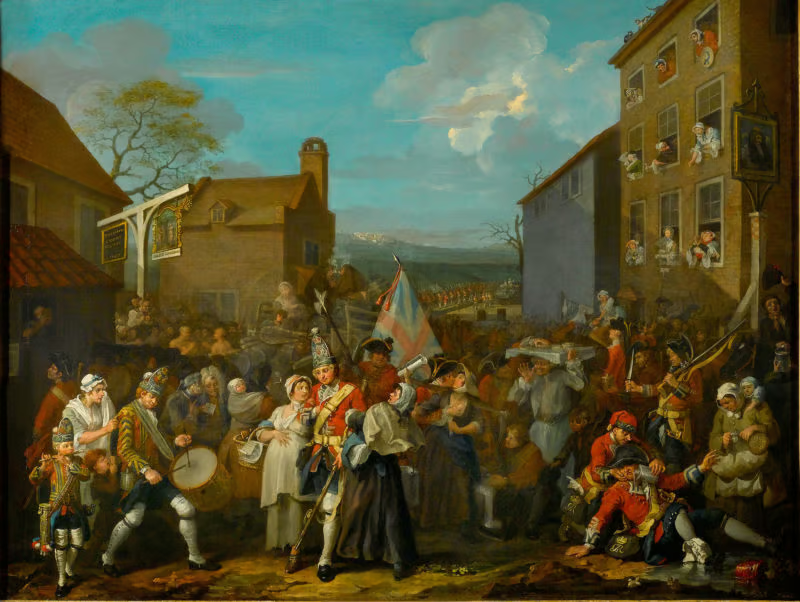
The March of the Guards to Finchley
The March of the Guards to Finchley humorously depicts British soldiers preparing to defend London during the 1745 Jacobite rebellion. Hogarth contrasts patriotism and family life with drunkenness, crime and vice, while satirising political uncertainty. Originally rejected by George II, the painting eventually became a fundraiser for the Foundling Hospital.
-
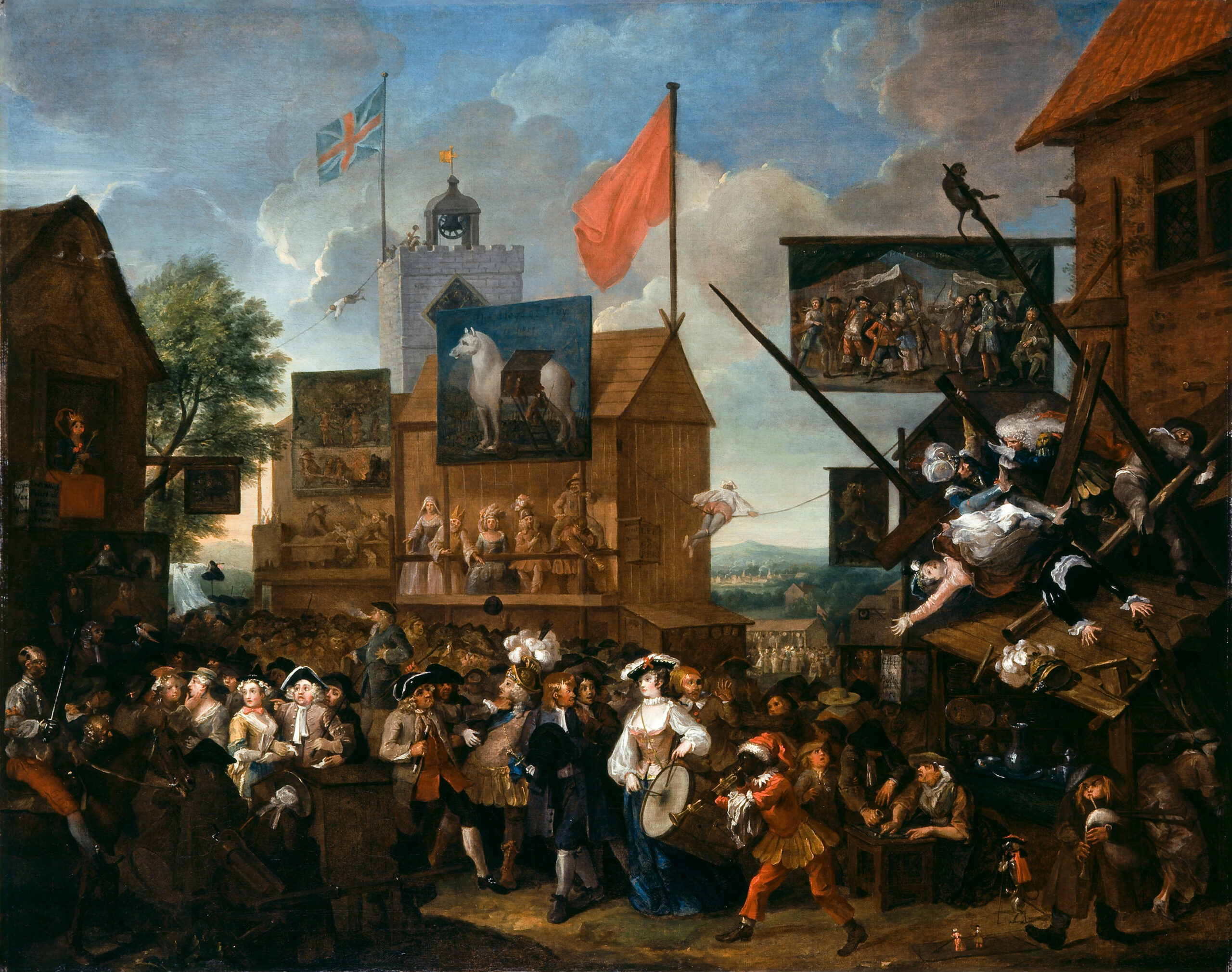
Southwark Fair
Southwark Fair was a lively London festival captured by Hogarth in 1733. His painting and print portray its colourful crowds, entertainers, theatrical performances, pickpockets and scams. Packed with contemporary references and humorous details, the work offers a vivid, recognisable portrait of London life and popular entertainment.
-
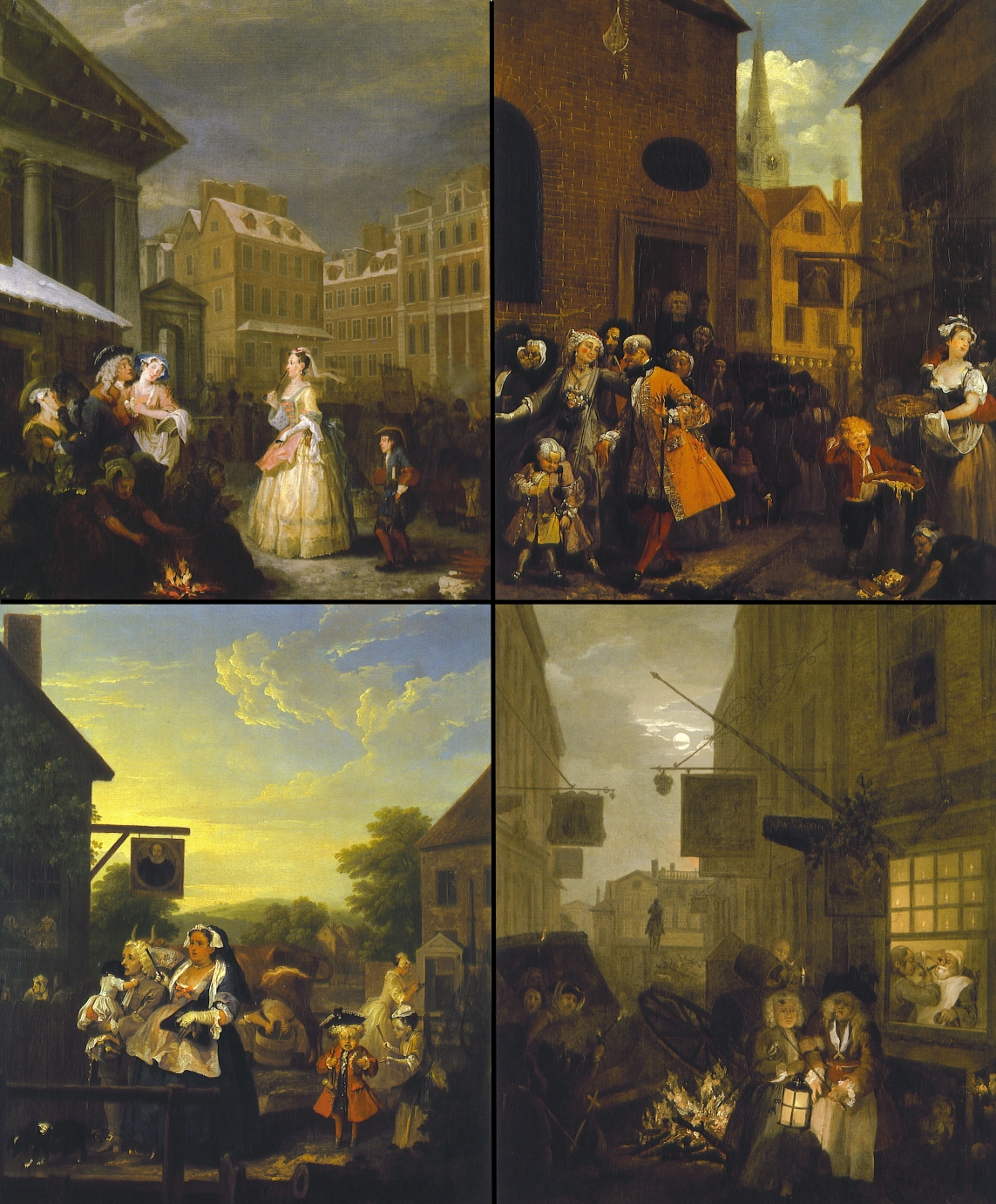
The Four Times of Day
The Four Times of Day (1736–38) is William Hogarth’s humorous portrayal of everyday life in 1730s London. Through four scenes—Morning, Noon, Evening and Night—Hogarth contrasts social classes, cultures and behaviour, satirising hypocrisy, fashion, drinking and disorder while capturing the energy and chaos of Georgian London.
-
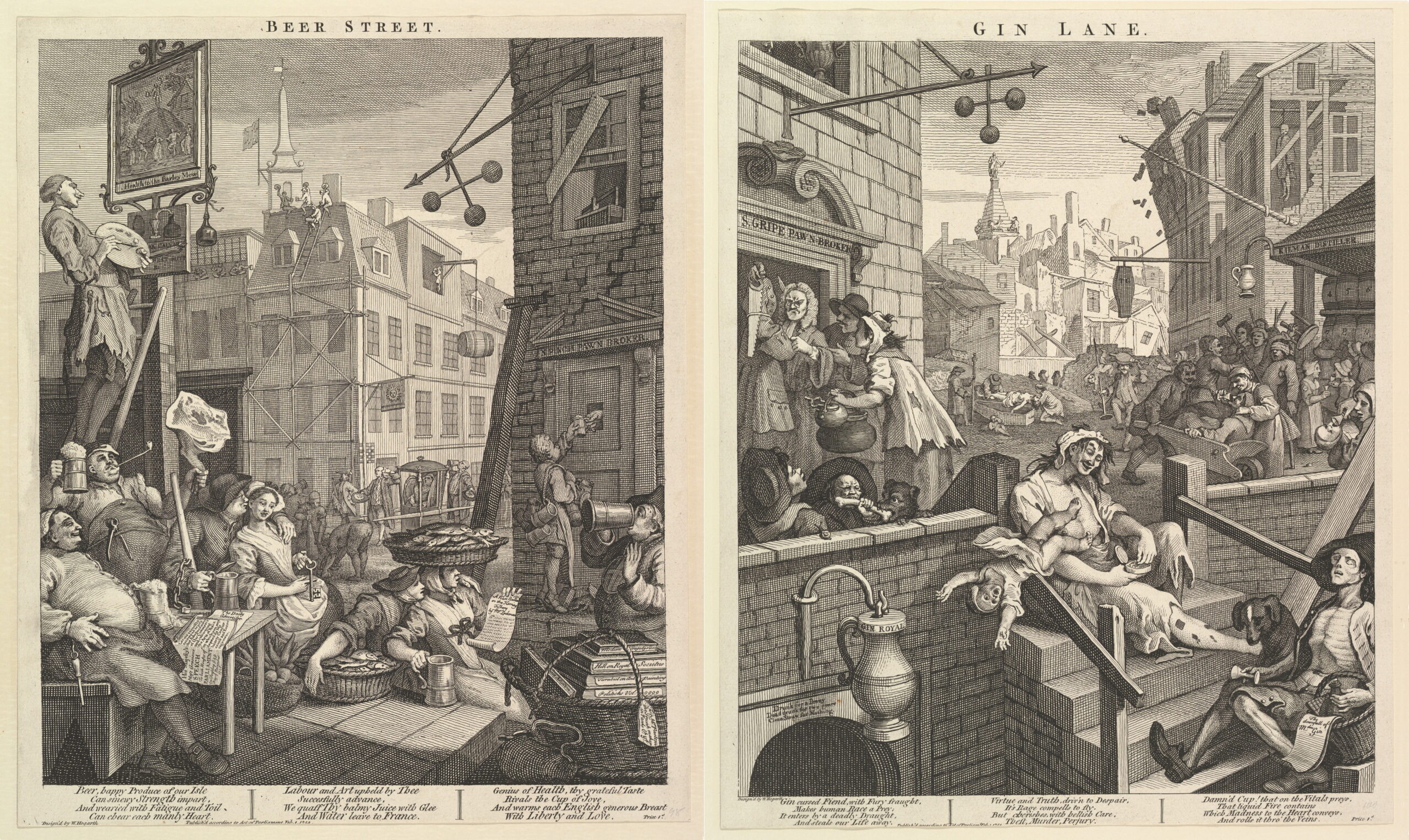
Beer Street and Gin Lane
Beer Street and Gin Lane, published in 1751, contrast the effects of beer and gin on Georgian society. Hogarth depicts Beer Street as prosperous and industrious, while Gin Lane shows poverty, addiction and despair. Together, the prints supported the campaign against the Gin Craze and highlighted its devastating social consequences.
-
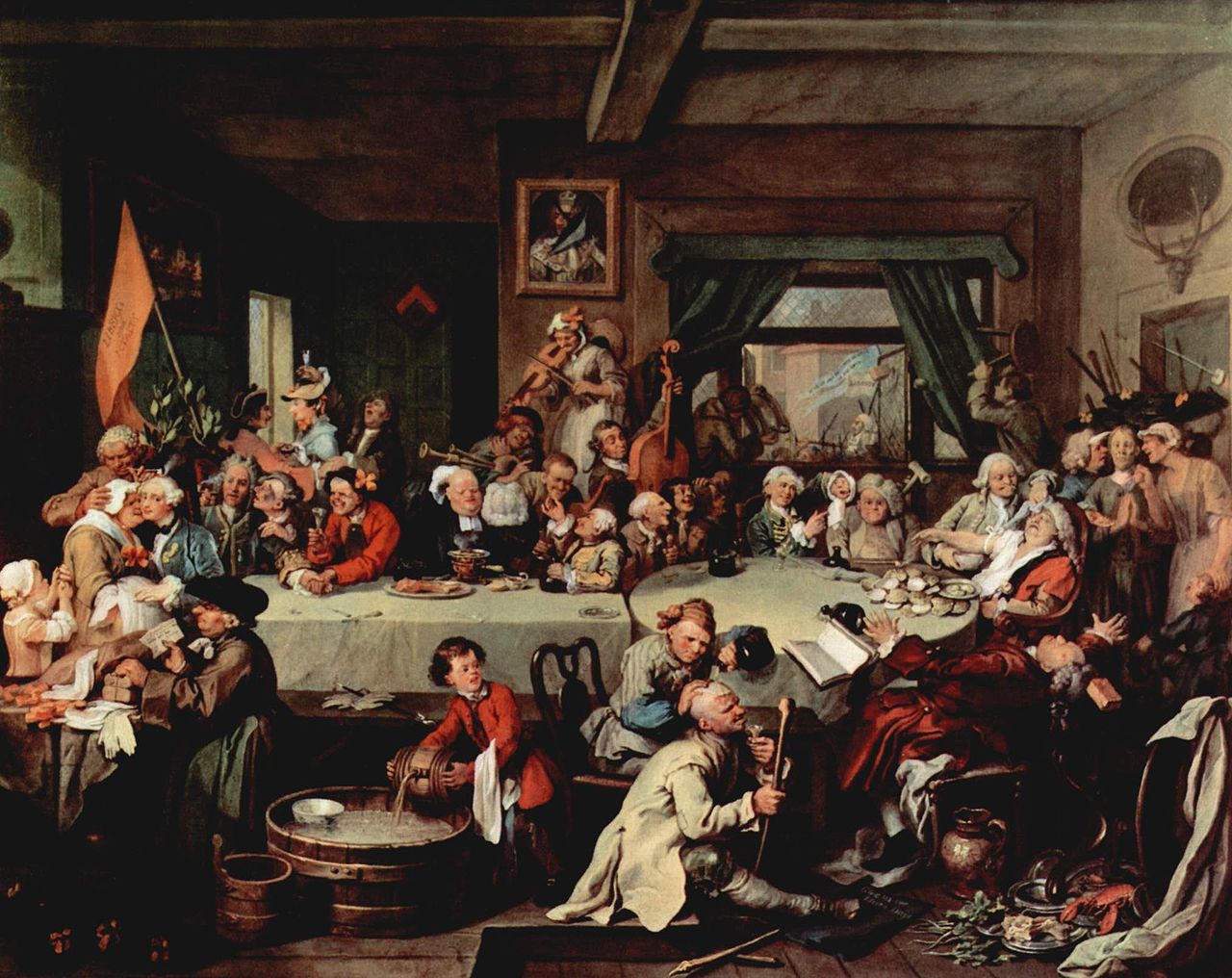
Humours of an Election
Humours of an Election is William Hogarth’s four-part satire of the corrupt 1754 parliamentary election in Oxfordshire. Through bribery, drunkenness, intimidation and violence, Hogarth exposes the dishonesty of candidates and voters, presenting British democracy as deeply corrupt, chaotic and broken. The series is displayed at Sir John Soane’s Museum.
-
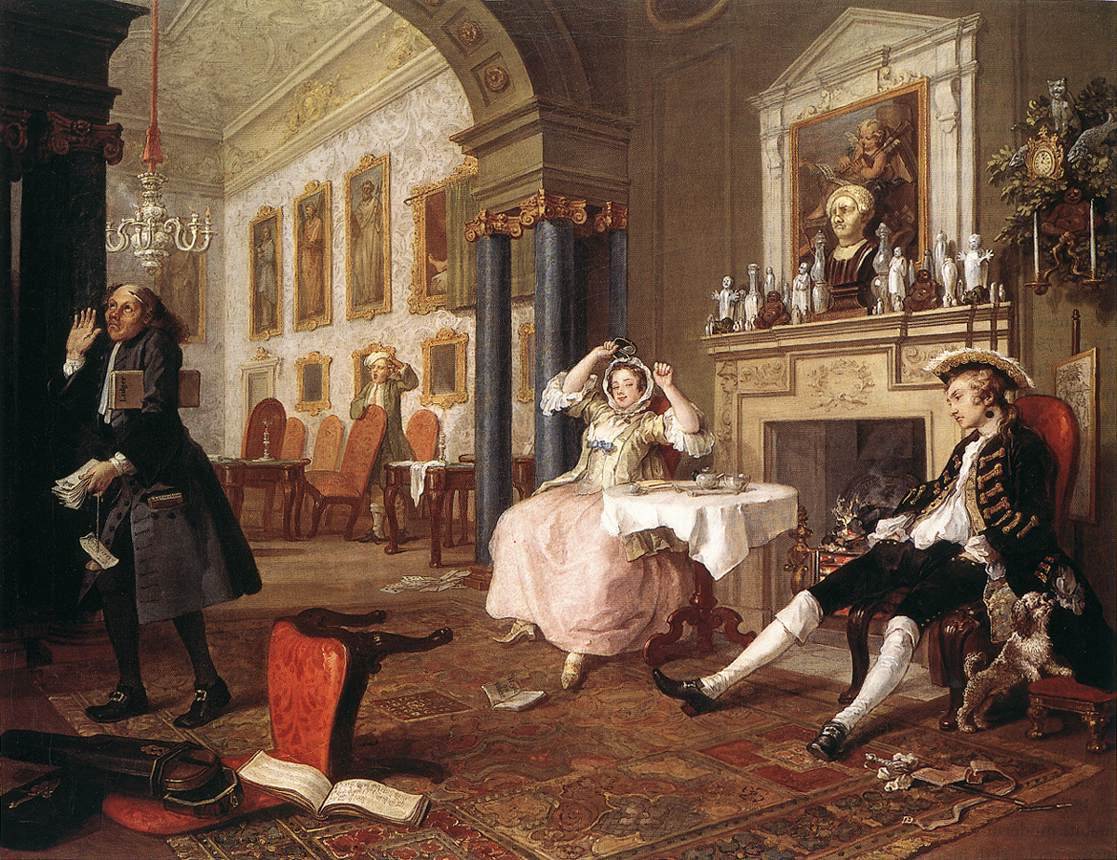
Marriage a la Mode
Marriage à-la-Mode is William Hogarth’s satirical six-part story of a wealthy arranged marriage. Through greed, adultery, disease and murder, the couple’s disastrous relationship ends in death. Hogarth exposes the corruption, hypocrisy, bad taste and moral emptiness of fashionable 18th-century society, where marriage is based on money and status rather than love.
-
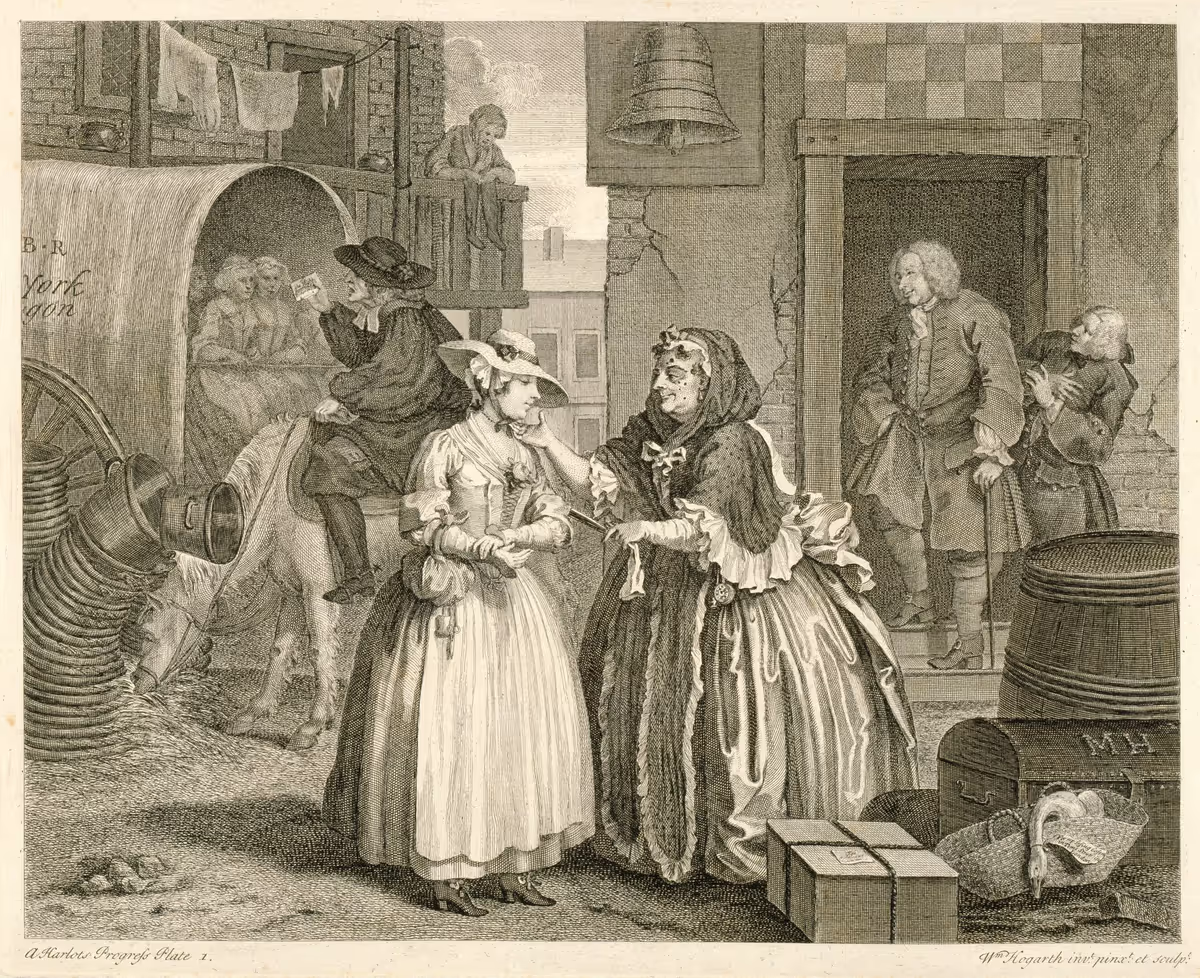
A Harlot’s Progress
A Harlot’s Progress tells the tragic story of Moll Hackabout, a naïve country girl lured into prostitution after arriving in London. Through six scenes, William Hogarth exposes the hypocrisy, exploitation and cruelty of Georgian society, ending with Moll’s early death and a cynical, disrespectful funeral.
-
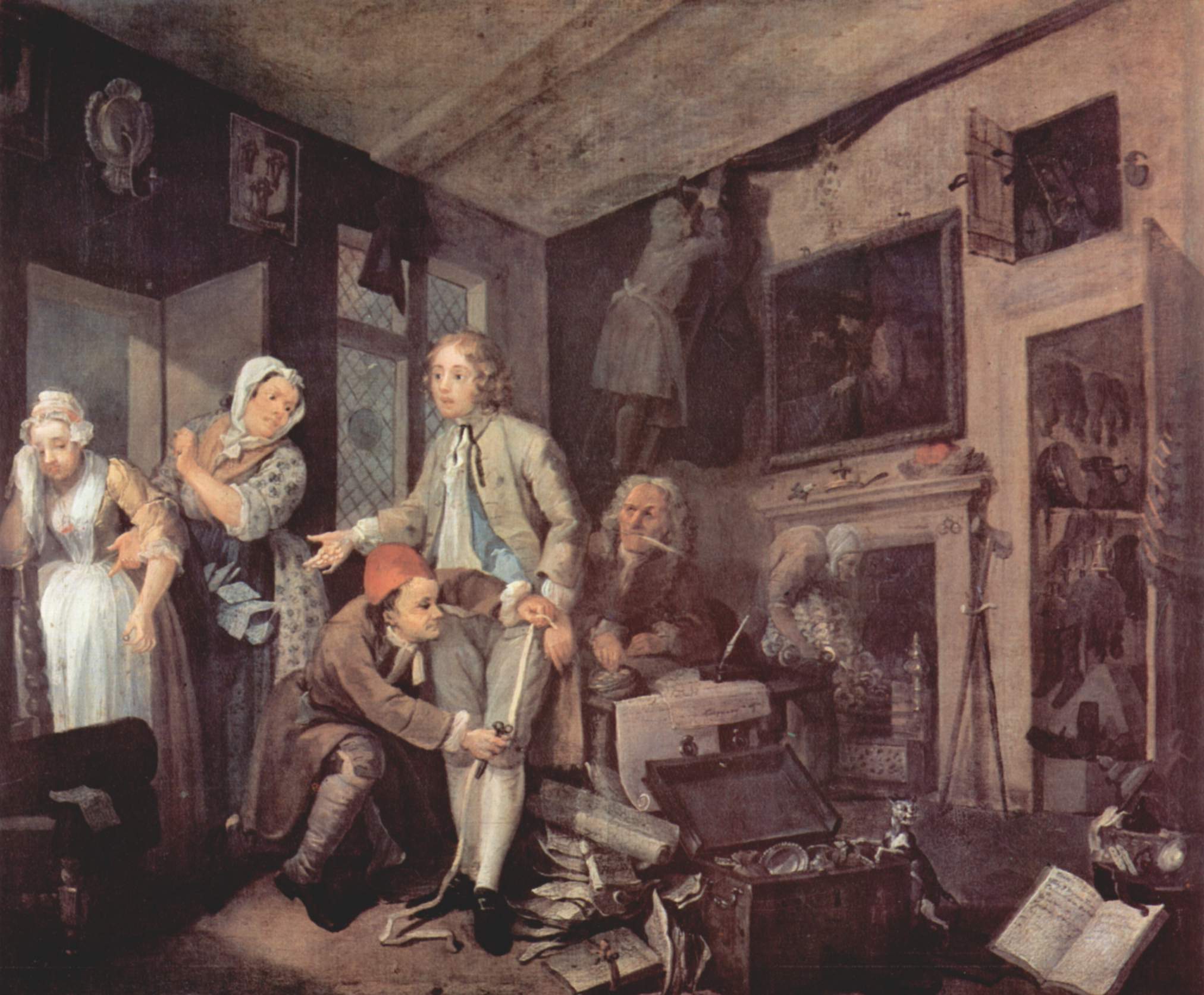
A Rake’s Progress
William Hogarth’s A Rake’s Progress tells the story of Tom Rakewell, who inherits a fortune but wastes it on luxury, gambling and vice. Rejecting loyal Sarah Young, he falls into debt, prison and madness, ending his life in Bedlam as a warning against greed, extravagance and poor choices.