Click here to go straight to the exercises.
Early Life
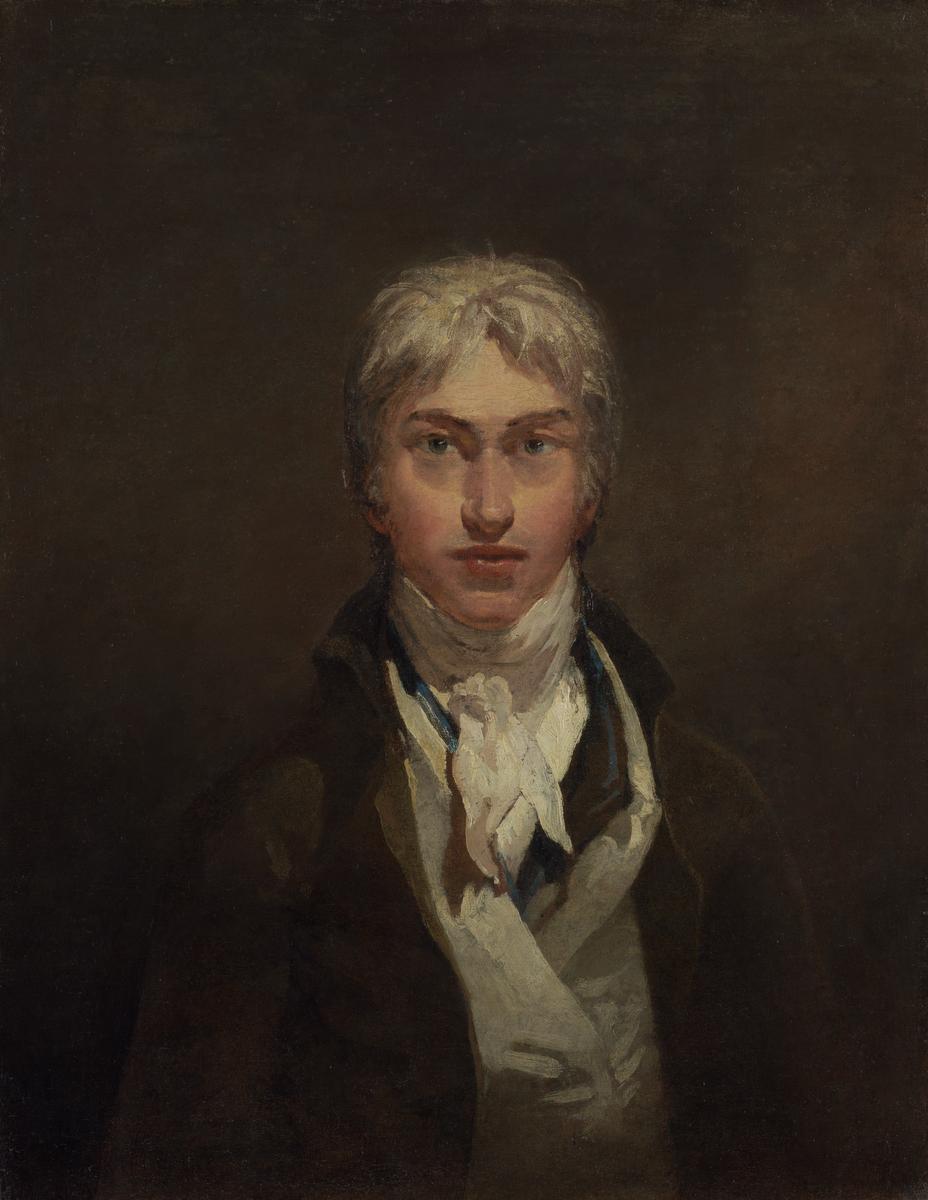
Joseph Mallord William Turner, usually known as J. M. W. Turner, was one of Britain’s most famous and influential artists. He was born in 1775 in Covent Garden, London, a working area which contained the fruit and vegetable market, but it was also an area of dirt and danger with prostitution and robberies common. Britain, at this time, was becoming a powerful industrial and naval nation.
Turner’s father, William Turner, was a barber and wig-maker, and his mother, Mary, suffered from mental health problems for much of her life. Later, she was committed to a mental hospital by Turner and his father who were worried about the effect her illness would have on Turner’s career and reputation. There was a lot of shame and guilt attached to mental illness at the time and a lack of appropriate treatment. Tragically, neither Turner nor his father ever visited Mary Turner in hospital.
Tragedy struck when Turner was 8 years old. His 5-year-old sister died and he was sent away from home to live with an uncle in Brentford and, later, with friends in Margate. This experience of being by the sea had a lasting effect on him and his art. Despite all these difficulties, Turner showed artistic talent from an early age.
Becoming an artist
When he was just 14 years old, Turner entered the Royal Academy of Arts in London, one of the most important art institutions in Britain. His early paintings were mainly detailed watercolours and landscapes. He quickly gained recognition for his technical skill and became a full member of the Academy at the age of 27, which was an impressive achievement for such a young artist. The art world was very elitist at this time and Turner was working class with a strong accent. However, he was ambitious and keen to be accepted as a gentleman within this privileged environment.
Types of art
Turner is best known for his dramatic seascapes and landscapes. He often painted storms, shipwrecks, fires, and scenes from British history. His work reflects the power of nature and the changing world around him. During his lifetime, Britain was transformed by the Industrial Revolution, and Turner included modern elements such as steam trains and factories in some of his paintings. One of his most famous works, The Fighting Temeraire, shows an old warship, which had fought in the Battle of Trafalgar, being pulled by a steam tugboat on its way to be dismantled. The painting symbolises the end of an era and the beginning of a new industrial age.
Unlike many artists of his time, Turner travelled widely. He visited France, Switzerland, and especially Italy, where he was deeply inspired by the light and colours of Venice and Rome. These travels influenced his later style, which became looser and more expressive. He focused less on fine detail and more on atmosphere, light and movement. In fact, many art historians believe that Turner’s later works helped to inspire Impressionism, a movement that developed in France after his death.
Personal life
Turner was a private and sometimes mysterious man. He never married, although he had a ten-year relationship with his housekeeper’s widowed aunt, Sarah Danby, with whom he had two illegitimate daughters. Heartbroken after the death of his father when he was 54 years old, Turner had a breakdown. He moved to Margate and fell in love with Sophia Booth who was a widow and ran the boarding house he stayed in. Later on they moved to a house in Chelsea where they lived together secretly.
Turner worked constantly and was extremely dedicated to his art. He also made a great deal of money from selling his paintings and investing in property. However, he lived quite modestly and often avoided social attention.
Legacy
When Turner died in 1851, he left many of his paintings to the British nation. He wanted his art to be seen by the public and today, a large collection of his works can be seen at Tate Britain in London. He is remembered not only as a master of landscape painting, but also as an artist who captured the spirit of a rapidly changing Britain. His ability to paint light, colour, and atmosphere remains powerful and modern even today.
Text
Exercises
Answers
English Lessons with Jane Daly © 2026
Leave a Reply